Career Agents Open Source Contribution Challenge 2026
Опис
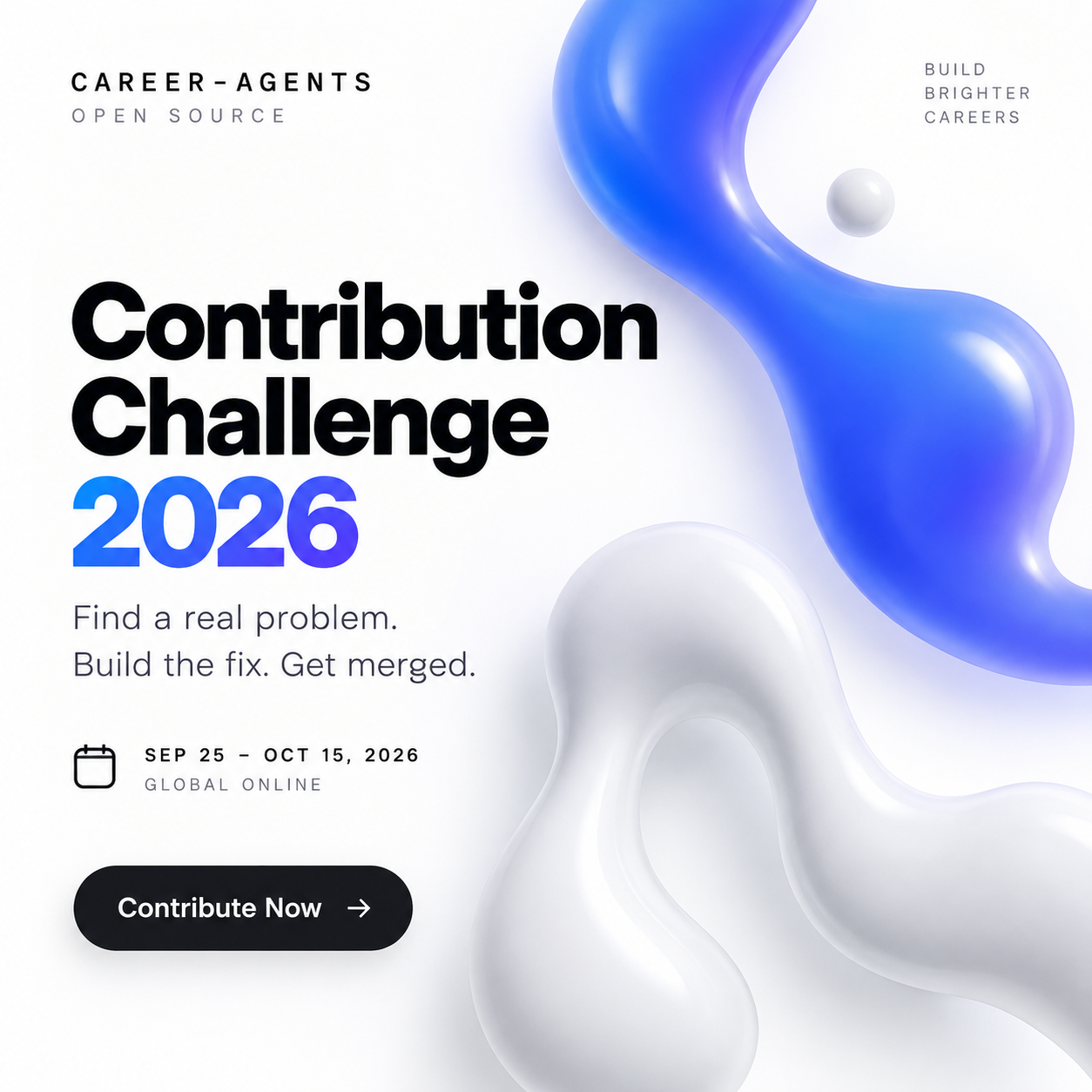
Career Agents Open Source Contribution Challenge 2026 Global Open Source Engineering Event Build. Test. Contribute. Come together. September 25 – October 15, 2026 Organised by Career Agents × CodeMyFYP A challenge for open source contribution focused on the development of Career Agents, the AI career operating system. Explore the GitHub repository About the event The Career Agents Open Source Contribution Challenge 2026 is a global engineering event inviting developers to contribute directly to a real-world, open AI project. Unlike traditional hackathons, participants are not required to build a completely new application. Instead, they will work within an existing open-source ecosystem by identifying real issues, suggesting improvements, implementing solutions, writing tests, and submitting pull requests for review by the maintainers. The challenge aims to advance Career Agents, an open-source AI career operating system that brings together specialized AI agents, developer tools, career intelligence, job search automation, and AI-powered professional development workflows. Participants can contribute in areas such as AI engineering, model context protocol (MCP), CLI development, backend systems, frontend development, testing, security, performance, accessibility, and documentation. Every contribution will be assessed for technical accuracy, relevance, maintainability, and its value to the project. The goal is to create significant open-source contributions that remain valuable beyond the event. About Career Agents Career Agents Open-source AI career operating system An AI-powered ecosystem that helps developers and professionals navigate their career development, job searching, resume optimization, interview preparation, and professional growth. Career Agents unifies multiple AI-powered capabilities within a cohesive ecosystem. 167 specialized AI agents 19 agent departments MCP + CLI developer integration MIT Open Source License The project includes specialized AI career agents, MCP-supported tools, global CLI and NPX support, agent-based job search workflows, ATS resume studios, interview preparation systems, company-specific interview intelligence, career knowledge graph functionalities, GitHub portfolio analyses, voice-activated career tools, REST APIs, and developer integrations. Career Agents are designed as an extensible platform where developers can contribute to or improve individual components and how various systems work together. Project repository: github.com/karthikrshet/Career-Agents Who can participate? The challenge is open to students, software developers, AI/ML engineers, full-stack developers, frontend and backend developers, DevOps engineers, QA engineers, security researchers, technical writers, designers, and experienced open-source maintainers. First-time contributors are also welcome. Participants do not need prior experience contributing to Career Agents, provided they understand their proposed changes and follow the project's contribution guidelines. Participation is free and open to developers globally. Areas of contribution Participants can contribute in one or more of the following areas. These areas are intended to guide development and not restrict valid improvements. Debugging & Problem Solving Identify and fix reproducible bugs that affect existing functionality. Contributions should include clear reproduction steps, an explanation of the underlying issue, a targeted solution, and, if applicable, regression tests. AI Agents & Career Intelligence Enhance existing agents, agent linkage, metadata, ratings, prompt quality, career considerations, and agent reliability. New agents should address a real use case and comply with the repository's schemas and registration requirements. Model Context Protocol (MCP) Develop or improve MCP tools, tool schemas, integrations, error handling, validation, interoperability, tool reliability, and documentation for developers. CLI & Developer Experience Enhance command line functionality, installation procedures, diagnostics, error handling, terminal usability, cross-platform compatibility, and onboarding of new developers. Job Search & Automation Improve job searching, candidate matching, ATS integrations, requirements gathering, application tracking, workflows for reaching out to recruiters, and automation reliability. Resume & ATS Intelligence Enhance resume analysis, ATS analysis, resume scoring, keyword intelligence, job description matching, resume generation, validation, and export workflows. Interview Intelligence Contribute to interview preparation, question generation, technical assessments, company-specific interview workflows, voice interview functionalities, scoring systems, and feedback quality. AI, RAG & Retrieval Systems Improve retrieval quality, ranking, context selection, knowledge graph functionality, integrations with AI providers, ratings, hallucination reduction, and reasoning reliability. Testing & Reliability Add significant unit tests, integration tests, regression tests, API tests, MCP tests, CLI tests, edge case coverage, and improvements in error recovery. Security & Performance Enhance input validation, dependency security, secure configuration, resource usage, startup performance, API latency, caching, and computational efficiency. Security vulnerabilities must be reported privately through the repository's responsible disclosure process. Web, UI/UX & Accessibility Enhance user-oriented interfaces, responsive layouts, navigation, loading and error states, keyboard accessibility, screen reader support, and overall product usability. Internationalization & Localization Improve language support, handling of regions, regional career workflows, international resume conventions, and multilingual accessibility. Documentation & Educational Resources for Developers Create or improve meaningful setup guides, architecture documentation, tutorials, API examples, MCP integration manuals, troubleshooting resources, and onboarding materials for contributors. How to participate 1 Register for the event Complete your registration through the official Luma event page. Provide your GitHub username so your submissions can be linked to your registration. 2 Explore the repository Review the README, contribution guidelines, architecture, open issues, and relevant documentation. Understand the existing implementation before suggesting changes. 3 Identify a meaningful contribution Select an existing issue, reproduce a real bug, or propose a useful improvement. Look for existing issues and discussions to avoid duplicates. Discuss significant features with the maintainers before beginning implementation. 4 Fork and Develop Fork Career Agents, create a dedicated branch, implement your change, and follow the repository's architecture, coding standards, and contribution requirements. 5 Test and Validate Run relevant tests and validations of the repository. Provide evidence that your implementation works and does not introduce regressions. 6 Submit a Pull Request Open a PR against the Career Agents repository. Explain the issue, the implementation, the tests conducted, and any related issues. Submit it before the official deadline. 7 Review by the maintainers and Merging The maintainers will evaluate your contribution, request changes where necessary, and merge submissions that meet the project requirements. Contribution Guidelines All participants must adhere to the existing contribution guidelines of the repository, the code of conduct, security policies, and applicable development instructions. Repository Integrity Career Agents contains interrelated agent definitions, registries, generated indices, mappings, and supporting resources. Contributors must maintain the relationships between these components. For applicable changes to agents and registries, follow the documented generation and validation processes: Bash python scripts/generate-data.pypython scripts/validate.py Do not manually modify generated files where the repository requires regeneration. Avoid duplicate agent IDs, orphaned agents, incorrect references, and inconsistent registry entries. Execute relevant validations after changes. A pull request that violates the integrity of the repository will not be accepted. Pull Request Requirements Each contribution should include a clear description of the issue, why it is important, the proposed solution, the technical approach, the relevant problem or discussion, and test evidence. Attach screenshots, logs, benchmarks, or reproduction steps where relevant. Describe any compatibility risks and disclose substantial use of AI coding tools. Keep PRs focused and respond constructively to maintainer feedback. AI-assisted Development AI coding tools, including Codex, Claude Code, Cursor, Gemini CLI, GitHub Copilot, Windsurf, and other development assistants, are allowed. Contributors remain responsible for understanding, reviewing, testing, and maintaining all code they submit. Automatically generated code, fake test results, unverified implementations, and changes that jeopardize existing functionality will not be accepted. Eligibility to Contribute A contribution must deliver significant value to the project. Examples include a confirmed bug fix, useful feature, substantial documentation improvement, reliability enhancement, security improvement, accessibility fix, or developer experience improvement. Submitting a PR does not guarantee acceptance or recognition. Spam submissions, plagiarism, duplicate changes, irrelevant formatting changes, fake evidence, malicious code, and PRs created solely to increase submission counts may be excluded. The number of pull requests and lines of code is not a measure of contribution quality. Event Schedule The event begins Contribution deadline Maintainers review Results and recognition A pull request does not need to be approved before the submission deadline if the review by the maintainers is still ongoing. However, it must be opened during the event period and ultimately meet the project's technical and acceptance requirements to be qualified. Evaluation Criteria Contributions will be evaluated based on engineering quality, practical impact, and alignment with the architecture and development standards of Career Agents. A small, well-tested fix that resolves a critical issue may be more valuable than a large feature that introduces unnecessary complexity. Multiple submissions are allowed, but the volume of PRs does not offer an automatic advantage. Acknowledgment of Contributors Contributors whose work meets the acceptance criteria of the challenge may receive a verified digital open-source contributor certificate and recognition within the Career Agents contributor community. Outstanding contributions may be recognized in the following categories: Recognition Categories Outstanding Open Source Contributor Core Engineering Contributor AI System Contributor MCP Engineering Contributor Bug Fix Award Reliability Champion Security Contributor Developer Experience Contributor Accessibility Contributor Documentation Contributor Best First-Time Open Source Contributor Recognition depends on the quality and eligibility of submitted contributions. Organizers may withhold a category award if no contribution meets the required standard. Exceptional contributors may also be invited to continue contributing to the project after the event. Registration or submission alone does not guarantee a certificate, prize, or maintainer role. Important Guidelines Security: Potential security vulnerabilities must be reported privately through the repository's responsible disclosure process. Do not publish exploitable details in public issues or pull requests. Authorship: Participants may collaborate but must accurately identify the authors of their contributions. Git co-authorship may be used when multiple developers have genuinely contributed. Code of Conduct: All participants must communicate respectfully, provide honest attribution, and adhere to the Career Agents code of conduct. Authority of Maintainers: Project maintainers hold final authority over changes to the repository. Participation in the event does not guarantee that a proposed feature or fix will be merged. Licensing: Contributions must align with the repository's MIT license and must not introduce code or assets that contributors are not authorized to submit. Frequently Asked Questions Is participation free? Did I need to create a new project? Can beginners participate? May I use AI coding tools? Can I submit multiple pull requests? Can I collaborate with other developers? Will every pull request be merged? Does a pull request need to be approved before the deadline? Will everyone receive a certificate? How should I report a security vulnerability? Official Links Career Agents Repository Source code, issues, pull requests, and documentation Event contact :- [email protected] Join the challenge Career Agents is an open-source project that grows through significant contributions from developers who identify problems, propose solutions, and improve the software for their users. Whether you’re fixing your first bug, enhancing an AI agent, developing an MCP integration, strengthening test coverage, or contributing to the underlying architecture—your work can help drive the project forward. Contribute to real software. Create a public engineering legacy. Help shape the future of the open AI career operating system.
Місце проведення
Розкажіть своїй мережі, що ви йдете
Поділіться цією подією, щоб розпочати розмови, запросити колег та налагодити контакти до її початку.
Подібні події

Google Cloud Community Days Udaipur 2026
Demo Nights (Pune Chapter)
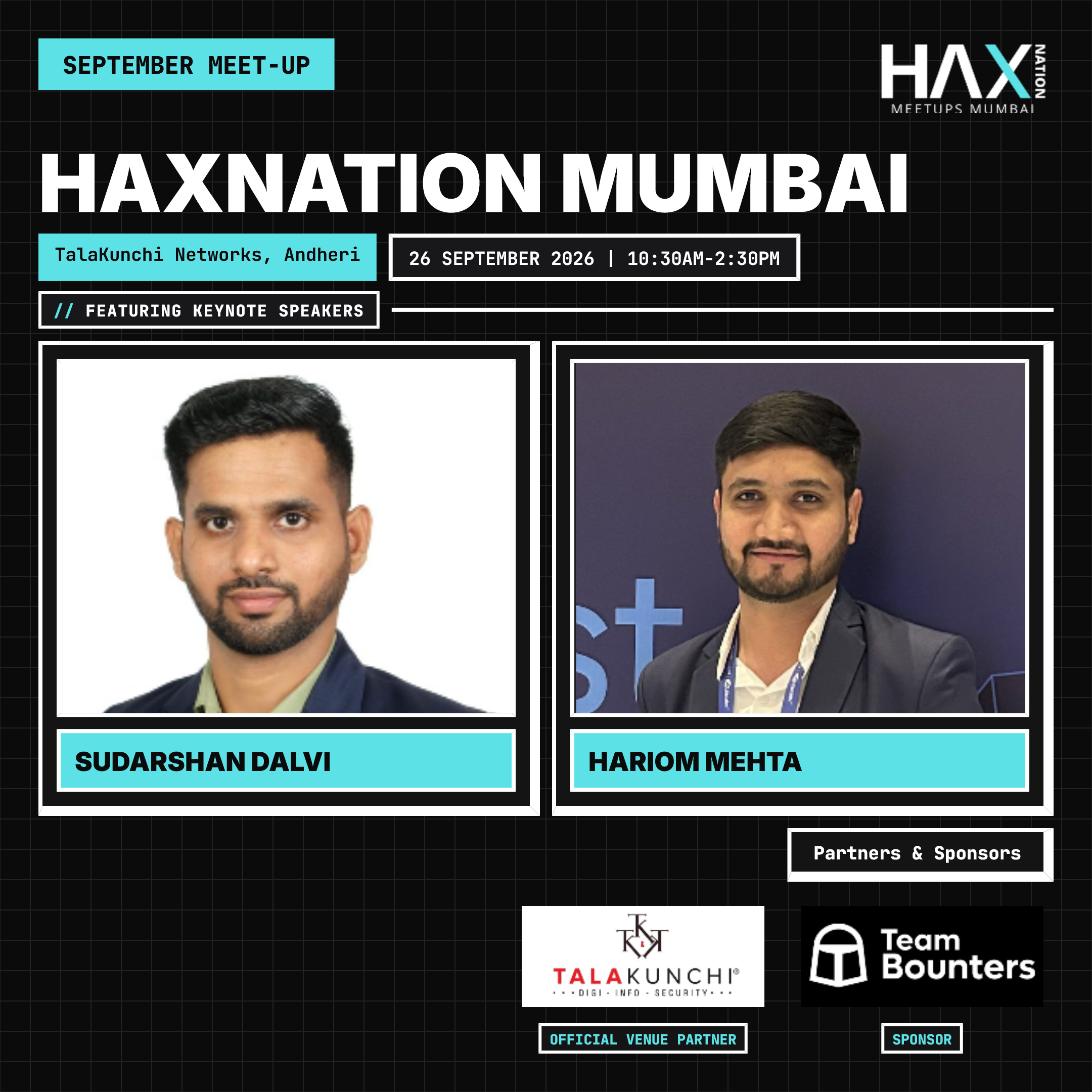
Haxnation Mumbai – Щомісячна зустріч у вересні

Creature Commons: Pet-Tech Edition | Bengaluru

No Slides Allowed - ML Paper Reading Session

Mixture of Experts | Hosted by Activate & SPARC at IISC
HeyGen Community Event - Lucknow
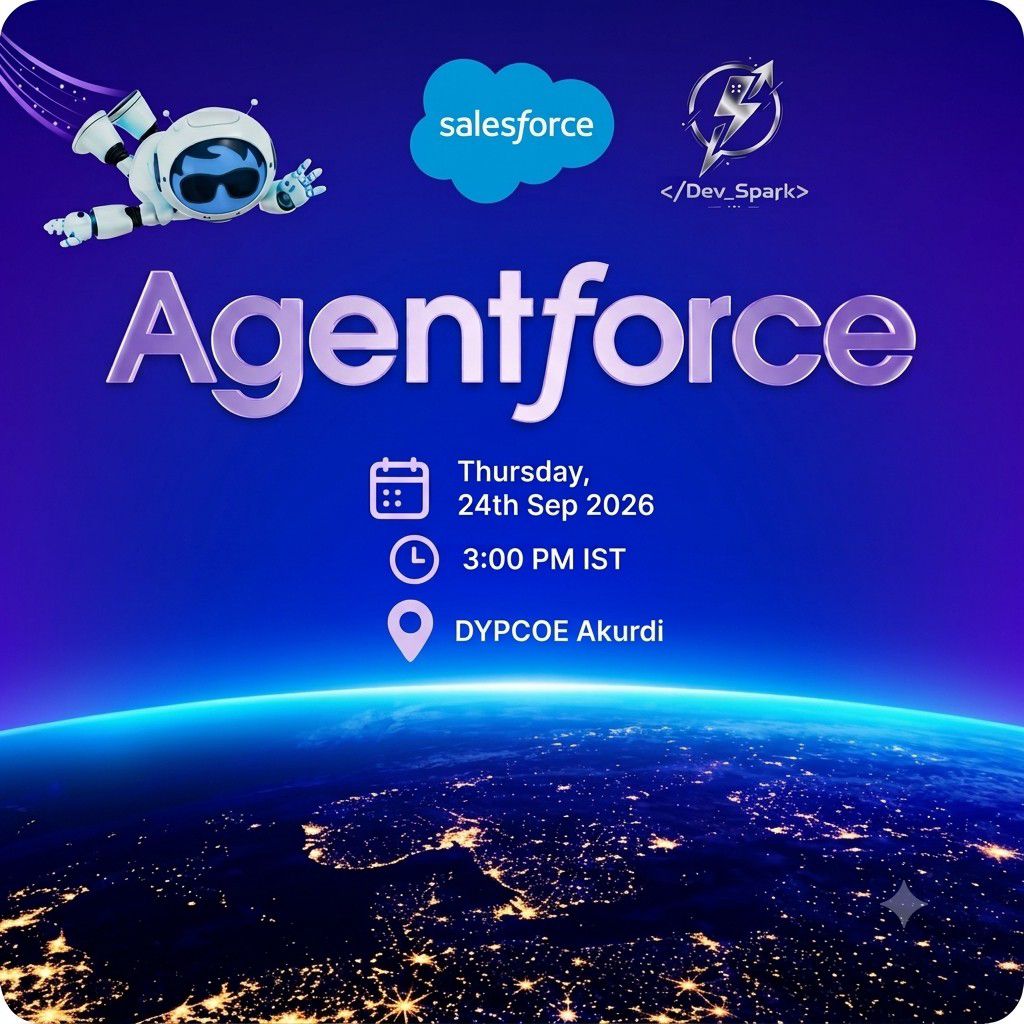
x DYPCOE : Salesforce Agentforce Developer Workshop
Amazon Quick User Group - Bengaluru

GPU.net X AI Co-Thinkers: В обчисленнях, витратах та останній милі GenAI Частина 2
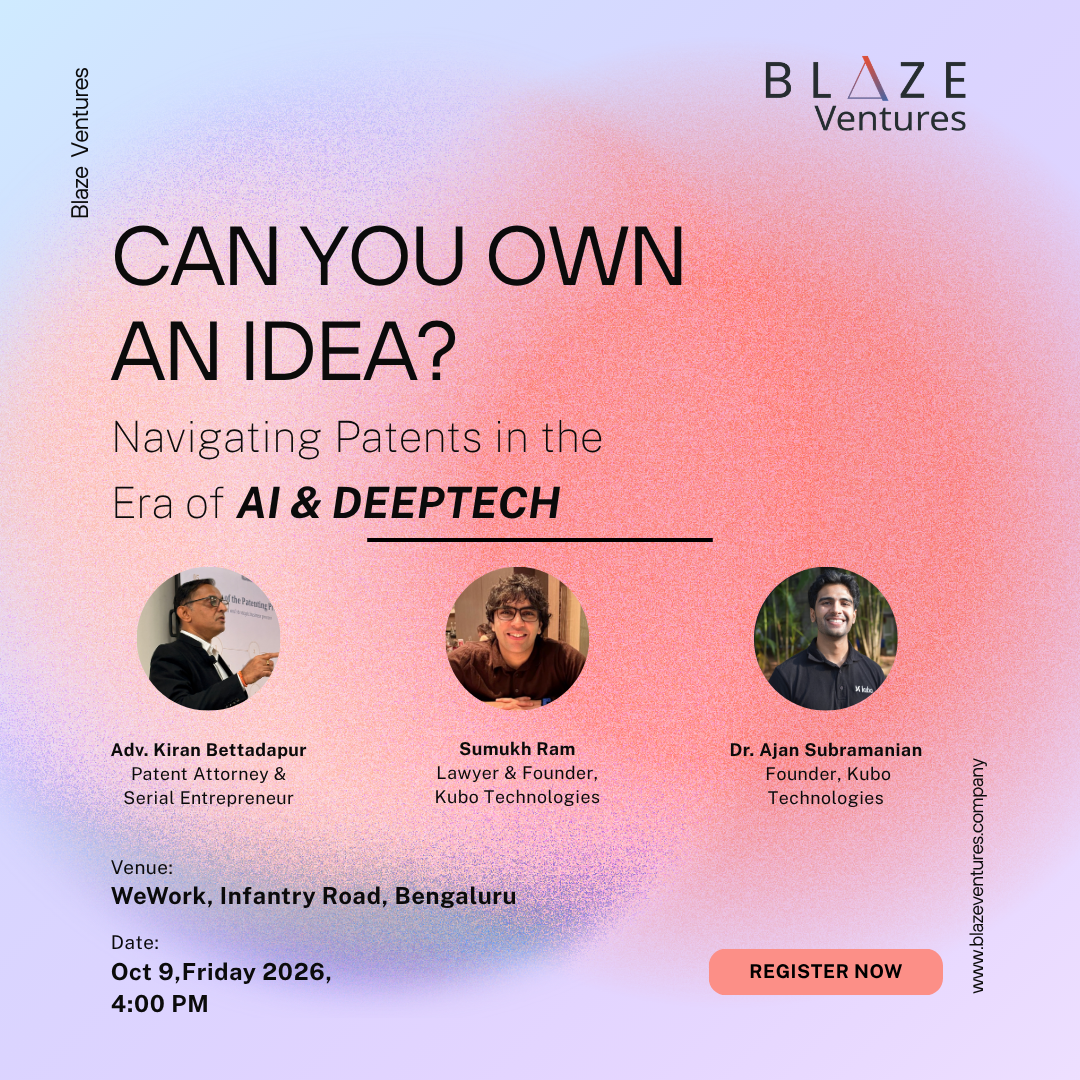
Can you own an Idea? Navigating patents in the Era of AI & Deep Tech