

Automation, Digitalisation, and Policy
Description
Automation, Digitalisation, and Policy This event spotlights NUS Faculty of Arts and Social Sciences academics' research and insights on automation, digitalisation, and policy implications in Singapore. Date & Time: 3:00-5:30 pm, Friday, 2 October, 2026 Venue: FASS AS7 Research Division Seminar Room (6-42)/Zoom Venue Address: NUS AS7 Shaw Foundation Building, 5 Arts Link, 117570a Singapore Research Nexus Policy Outreach Event Directions: To get to the Research Division Seminar Room, go to Level 6 of the AS7 Shaw Foundation Building and turn right after exiting the lift, going around the corridor past the washrooms. Turn left and you will see the Research Division Seminar Room directly ahead. Registration In-person: Eventbrite (this website) Online: Zoom Note: This event is aimed at academics and those working in policymaking. Please fill out all fields to register: 1. Name; Email; 2. Job title; 3. Organisation. If you do not fill out all four fields when registering, your ticket may be cancelled. Directions: To get to the Research Division Seminar Room, go to Level 6 of the AS7 Shaw Foundation Building and turn right after exiting the lift, going around the corridor past the washrooms. Turn left and you will see the Research Division Seminar Room directly ahead. Download the programme here. Speakers Nina L. POWELL | Associate Professor, NUS Department of Psychology Chao HAN | Associate Professor, NUS Department of Chinese Studies Emily HC Chua | Associate Professor, NUS Department of Sociology and Anthropology Presentation Abstracts and Biographical Statements of Speakers Human Agency in an Automated Society: AI, Care, and Education in Singapore Nina L. POWELLNUS Department of Psychology As AI becomes embedded in education, healthcare, and public life, automation changes what people do and what they are required to do for themselves. This talk examines those changes through the lenses of human agency, care, uncertainty, and psychological reductionism. I argue that intelligent systems can reinforce a reduced picture of the person as predictable, measurable, and optimisable. Such representations can narrow our understanding of human beings as agents who interpret, deliberate, revise, care, and act under uncertainty. In education and other institutional settings, this matters because systems can make these capacities easier to bypass. Responsible AI therefore requires attention to the forms of human judgment, responsibility, uncertainty, and care that institutions continue to cultivate. I propose a human-development approach that evaluates digital systems in terms of how they shape human agency and the capacities required to exercise it. Dr Nina L. Powell is an Associate Professor of Psychology and Director of Undergraduate Studies in the Department of Psychology at the National University of Singapore. She is also Associate Director of the Centre for Teaching, Learning and Technology. Her research lies at the intersection of moral psychology, cognitive and developmental psychology, and the ethics of human–AI interaction. She is particularly interested in how people understand moral responsibility, agency and autonomy, how these capacities develop, and how they are shaped by social relationships, care and emerging technologies. Her current work also examines the implications of artificial intelligence for human judgment, decision-making, education and well-being. Large language models and the automated assessment of human language performance: Evidence and risks from bilingual interpreting Chao HAN NUS Department of Chinese Studies Large language models (LLMs) are increasingly being explored as automated judges of human language performance in educational assessment, such as writing, speaking, translation, and interpreting. Yet their ability to generate a score does not establish that the score is valid, or that it should determine a person’s educational outcome. This presentation examines that distinction through Chinese-English interpreting, a bilingual and multimodal stress test for LLM-based automatic assessment or generative judging. Drawing on a program of studies based on 1,725 interpreted performances in the Interpreting Quality Evaluation Corpus, I examine how LLM-generated or generative judgments compare with human judgments and how their performance changes across models, language directions, assessment criteria, reference availability, scoring granularity, and prompting strategies. The findings are cautiously encouraging: LLM judges can be highly consistent and show meaningful alignment with human raters, but their correlations, severity differences, limited discrimination, and uneven generalizability fall short of expectations for moderate/high-stakes scoring. Building on these results, I introduce a three-layer framework covering system, measurement, and governance risks, together with a multi-tiered implementation model for generative judges, ranging from advisory and supervisory uses to selective autonomy. The central argument is that an LLM’s capacity to produce scores is technical; the authority granted to those scores must remain an evidence-based assessment and governance decision. This matters directly to multilingual Singapore. Dr Chao Han is Associate Professor (Dean’s Chair) and Assistant Dean (Research) in the Faculty of Arts and Social Sciences at the National University of Singapore. Over the years, Dr Han has been deeply engaged in research and practice on quality assessment in multilingual, multimodal, and multiagent translation and interpreting (QAM3T&I), with a particular focus on manual and automatic scoring. His work has appeared in leading international journals, including Language Testing, Language Assessment Quarterly, Assessment & Evaluation in Higher Education, Interpreting, Target, and Computer Assisted Language Learning. Dr Han is currently Associate Editor of Language Testing in Asia (Springer Nature) and serves on the editorial/advisory boards of Language Testing (Sage) and Interpreting (John Benjamins). Fintech and its Futurisms – A Global Condition in Singapore Emily HC CHUANUS Department of Sociology and Anthropology This talk considers Singapore’s emerging blockchain-based fintech sector and the futuristic modes of thought and discourse that are operative within it. I argue that “fintech futurisms” are different from the futurisms of other, non-fintech startups because they are bets not merely on new products and services, but on new forms of money – which hinge on new networks and systems of trust. Fintech startups in Singapore are tapping a global condition of intensifying uncertainty and confusion around the grounds for trust in money. Focusing on business competition misses the opportunity to engage in more thoroughgoing and potentially productive conversations on our entangled economic relations. Dr Emily HC Chua teaches and writes on competing constructions of society, value, money and truth, in an age of fast and ubiquitous digital devices. Her current project, Money Island, explores the novel financial technologies that people are creating and living with in Singapore. Ranging from trading apps to pension platforms to blockchain-based versions of the Singapore dollar, these fintech innovations engage the island’s residents in a permanent-beta relationship to money, where windfall profits, real income losses, and deepfake phishing scams are “always maybe” on the horizon. The project asks what notions and forms of the good are created in and by these future-focused forms of life. Her first book, The Currency of Truth: Newsmaking and the Late-Socialist Imaginaries of China’s Digital Era (2023), is an ethnography of journalism in China that shows how online news articles work as a kind of currency which industry players use to navigate and manage their relational networks. She also publishes on startup entrepreneurship, digital media, and popular political discourse in Singapore and China. Her research has been funded by the American Council of Learned Societies, the Wenner-Gren Foundation for Anthropological Research, and the UC Berkeley Institute of East Asian Studies, among others.
Event location
Let your network know you`re going
Share this event to start conversations, invite colleagues, and connect before it begins.
Related events
Techies x SGInnovate Tech Talk: New Dev Roles in the AI era
Ads & AI Singapore Meetup # 13: The AI era Tech scape
Agentic Workflow Hacking with M365 Copilot
AI In Business For Non-Techies

RFC: REAL STEEL IN ACTION 🤖🥊 Robot Fighting Championship × AICON 2026 (Race week) in Singapore
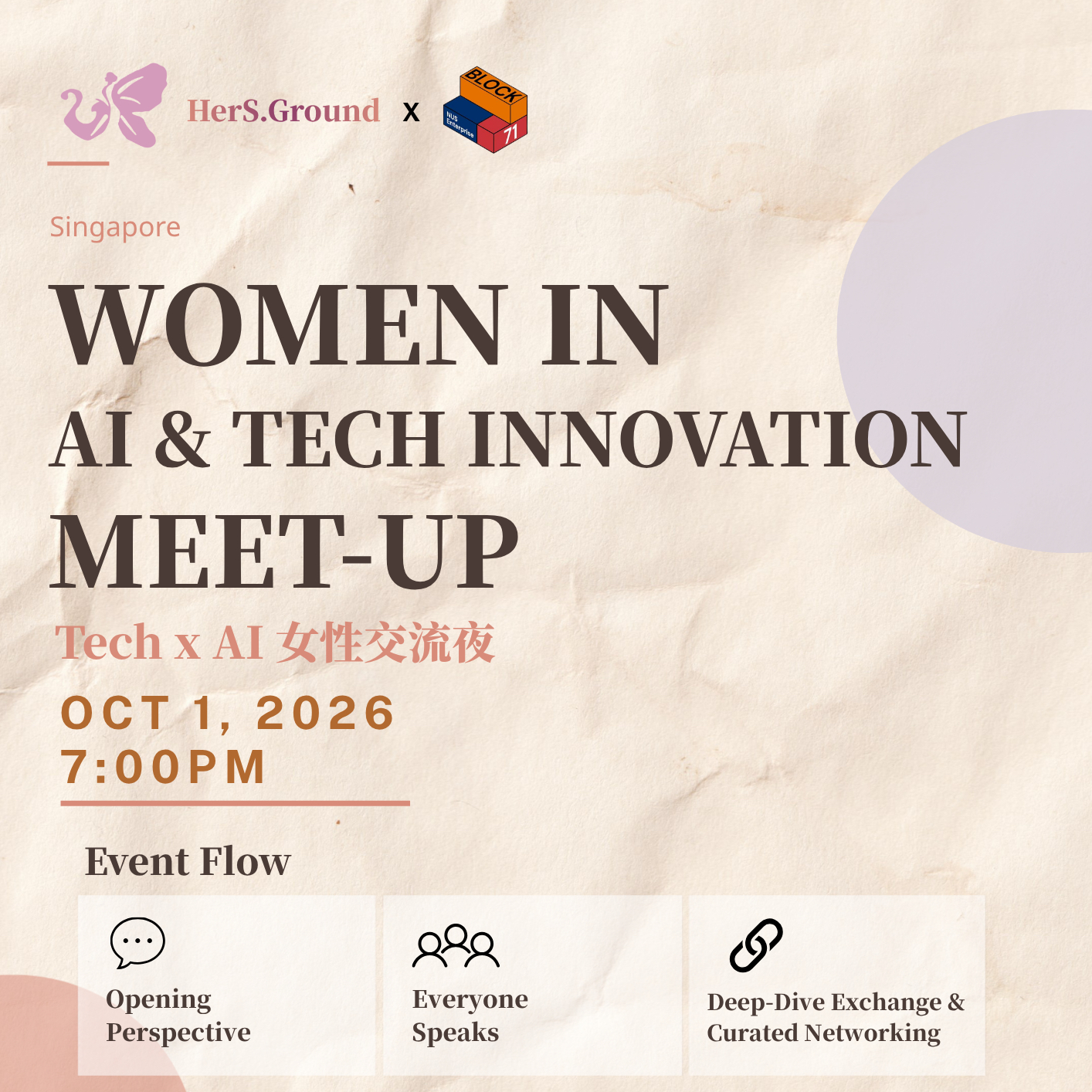
HerS.Ground x Block71 | Women in AI Curated Meetup
Katong AI Night
Agentic AI in Healthcare: Cutting Through the Hype

Cybersecurity, AI & Future Digital Infrastructure

Courage AI Playground: Package Your Expertise - Fractional, Consultancy, Advisory
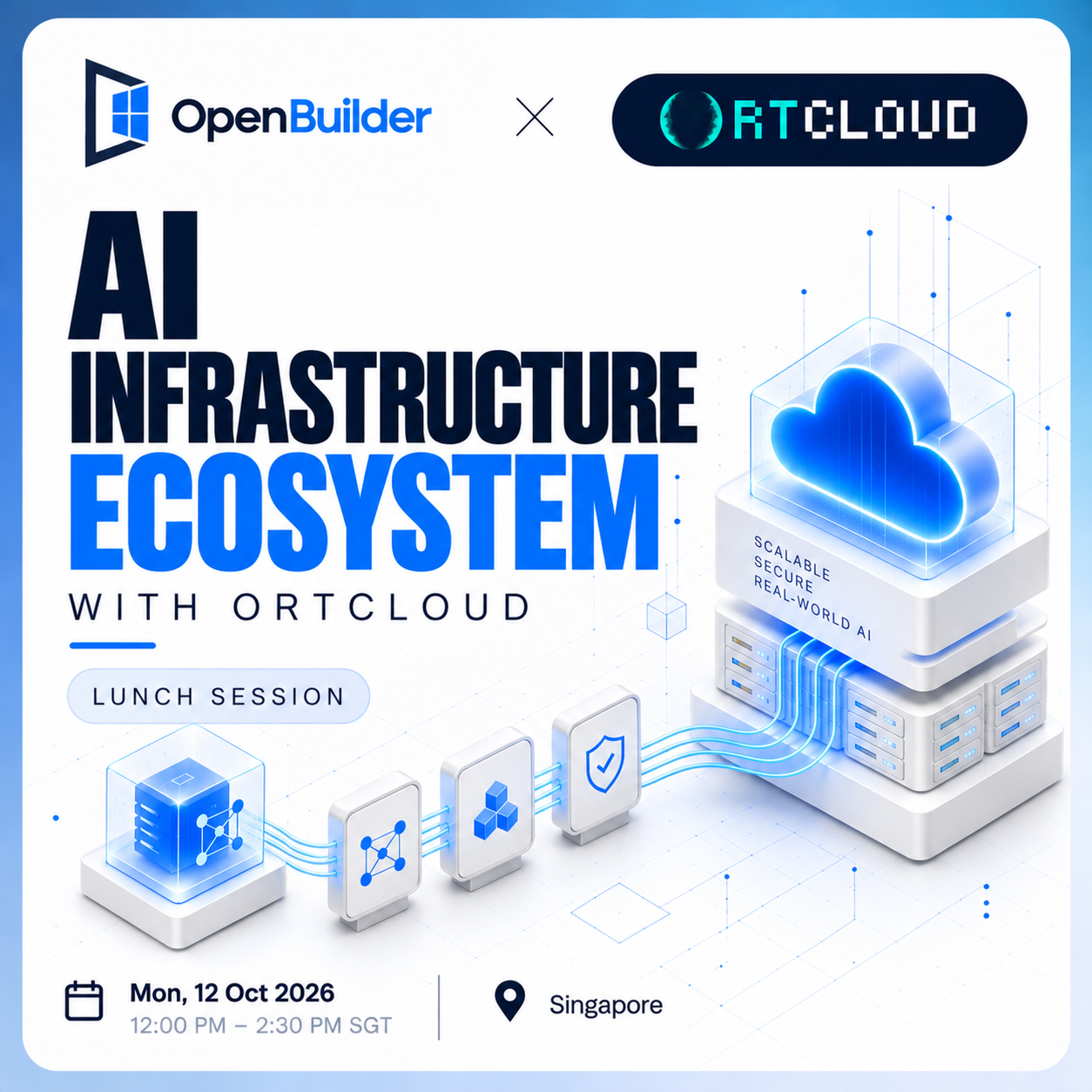
The AI Infrastructure Ecosystem with Ortcloud